Chemotherapy…

After finally finishing my checklist prior to starting chemo, it was time.

Chemo Day #1

Every chemo session starts with a lab draw, doctor’s appointment, and scheduler visit. Then to the chemotherapy suite for infusion. It’s quite the ordeal, spending nearly 6-8 hours at Cancer Care Northwest (CCNW) depending on how backed up the doctor is that day. Some days we waited up to an hour just to see the doctor before starting the infusion. The doctor’s appointment consisted of reviewing my labs for the day, checking my weight, checking my vitals, and my signs/symptoms for the week. The first appointment was brief with a quick review of side effects to expect and things to look out for that ended with, “well let’s see how you do.”

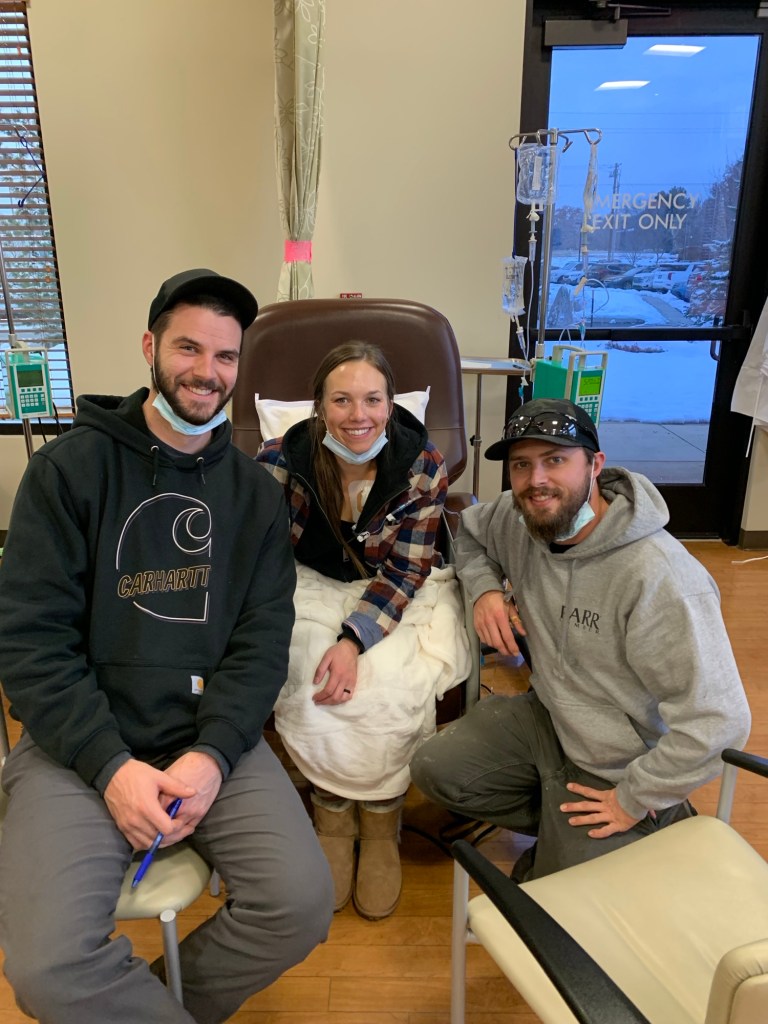
When I say “we” I am referring to my husband and I. He came to every chemotherapy appointment with me, hung out or worked from his computer he brought with him. CCNW allowed 2 visitors during these infusions, so for my first infusion my friend of nearly 15 years joined as well, Brock. The first infusion was longer because they infuse at a slower rate to make sure I am tolerating it and I was also receiving Keytruda, an immunotherapy drug I was going to receive every 3rd treatment. So I found myself a chemo chair (one with a heated seat of course), set up my heated blanket my bosses got me and my new Stanley cup my friend Grace sent me. I got all situated and a couple nurses came up to me with a gift. They introduced themselves and said the gift was from Tracy (the RN that used to work at CCNW that helped me get my appointment with Dr. Moline at the start of all this). The gift consisted of a heat rice pack and a beanie. I remember the note, “A little something to keep you warm”. Which was very helpful, especially when I had to put on my cold mitts during the taxol infusion. The nurses were all very sweet and made me feel comfortable.

My nurse was Whitney. She explained everything very well, even when Brock asked her “what IS chemotherapy?” She was very short and blunt stating, “it is basically poison killing all of your fast growing cells”. SWEET.

The infusion starts with accessing your port (mine was left accessed due to having it placed the day before). Then you get your pre-meds (Benadryl, anti-nausea and Pepcid) which made me very drowsy and a bit woozy due to fasting and not having anything to eat. Then a 30 minute break before infusing chemo and Keytruda. I probably sat in the chemo chair for a total of 5 or 6 hours the first day.

We sat, talked, laughed and enjoyed each other’s company the entire time. Chemo #1 done. Now we wait and see what side effects I will get. . .
Port

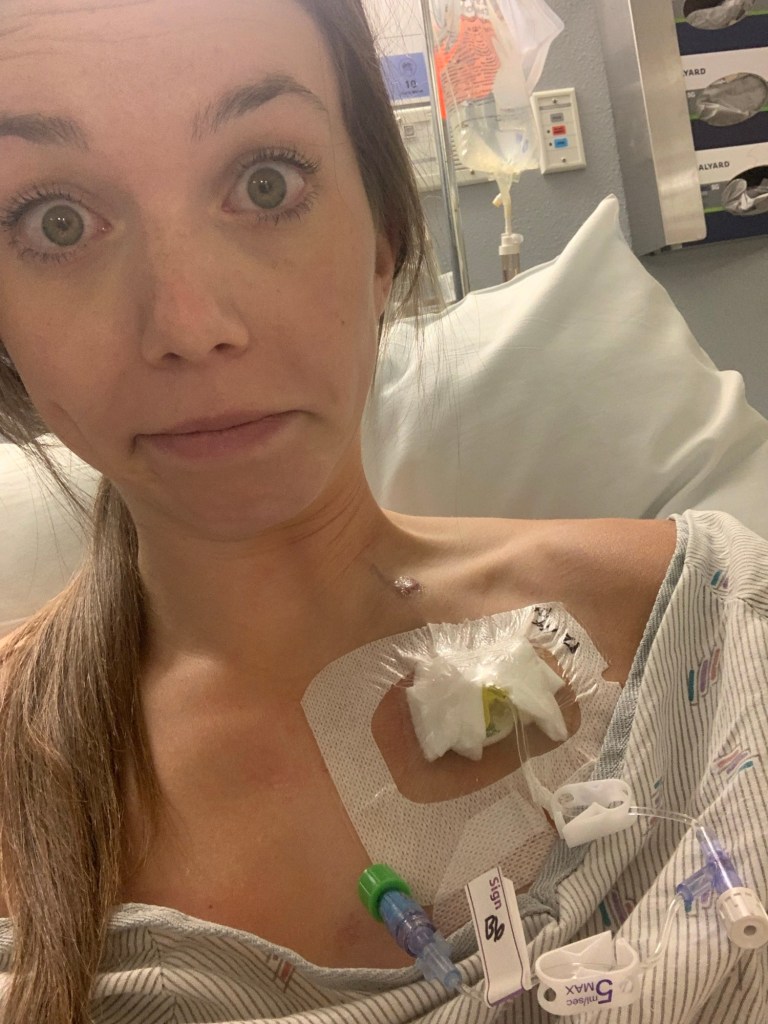
Next up on the checklist before starting chemotherapy was getting a port placed. A port is placed so the chemotherapy is infused into a larger vein and is distributed faster. If they use a smaller vein in the arm, the chemotherapy will ruin the veins and the infusion is at a way slower rate. The port is a small reservoir, a plastic or metal cylinder usually placed just below the collar bone, connected to a catheter that enters the jugular vein in the neck. Usually you would get a port placed about a week before you start chemo, however since everything is centered around insurance authorization in this country (rant to come on that later) I had my port placed the day before chemo started. This wasn’t a huge issue at the time, however it doesn’t allow your port incision to heal up before injecting poison into your body that doesn’t allow you to heal well at all (more to come on that later as well).

The actual port placement procedure was an experience. I had mine placed at Valley Hospital. They put you under light sedation (you are awake but very drowsy) and can hear/ feel everything going on. They don’t put you all the way under because they have you move and adjust as they place the port. They put a big sheet over your head and numb the area. You can hear the sound of medical instruments clacking away and the voices of nurses and the doctor “pass me this, cut open here, place here…” and I couldn’t feel much except for a deep pressure where they placed the port.

I came out of the procedure room a little drowsy and sore. I was placed on restrictions for my left arm since the port was placed in my left upper chest- no reaching overhead, no pushing or pulling and no lifting anything over 5 lbs for 10-14 days. (Again, my worst nightmare).

Diet

I have never liked the word or idea of a “diet”. I feel you have to choose a lifestyle and make decisions every day to stick with the lifestyle you want for yourself. However, it’s easier to use the word diet for now. So what I did next…

I took all of the research I did on my own as well as bits and pieces the dietitian told me about getting enough nutrients in my diet during chemotherapy. What I came up with was doing the keto diet, eliminating sugar completely, very restricted amount of carbohydrates (vegetables and berries only), intermittent fasting (especially during chemo days), 1 gallon of water a day, and supplementation (vitamin D, magnesium, zinc, and glutamine- no fish oil or turmeric because it thins your blood). I continued to drink coffee and had pre-workout, however stuck with this diet religiously – day in and day out. I looked at every single seasoning I had (there is added sugar in almost every single seasoning), every sauce I had (added sugar), and restricted my diet for nearly 6 months during treatment. I am actually still doing this diet over a year and 3 months later to prevent cancer from coming back, however less strict than I was during these 6 months.

I had one last “cheat meal” before starting chemo. A burger, fries and 1 last beer on the Monday night before chemotherapy started Thursday. Got a few friends and family members together and had my meal of choice at Hops n drops – jalapeño cream cheese burger with fries and an IPA.

Alright, now I am ready

Nutrition

One other resource that I decided to try out, again recommended by Dr. Moline, was a consultation with the registered dietitian at Cancer Care Northwest. I was actually pretty excited about this appointment because I had done so much research already on diet for cancer treatment and cancer prevention. I was certainly ready for this one, I had my list of questions and options for a strict diet regimen. My friend Hunter wanted to join me because he was interested in what the dietitian had to say as well and be there for moral support. Well to my disappointment the biggest advice the dietitian gave me was “eat whatever you want and whatever sounds good, as long as you keep your weight up”. I guess the biggest concern they have for cancer patients going through chemotherapy is losing weight and not being able to stay healthy enough to sustain chemotherapy treatments. Well this was not the only answer I wanted… so I asked my million and a half questions on the keto diet, vegetarian diet, intermittent fasting, restricted eating, fasting during chemotherapy, caffeine intake, hydration, supplementation, and sugar intake. She never gave me her opinion just the “facts”. And what she told me is “it is not proven that sugar causes cancer nor causes the spread of cancer”. Well it has been proven and hidden because God forbid the sugar industry crashes in America. What the hell would we do?

So, back to the drawing board I go, because clearly I am on my own for this one.

Emotions

Speaking of my poor husband…

I haven’t really talked about my emotions through this entire process, and that’s because I didn’t really have any. It was an odd feeling of not having any feeling, if that makes sense. I was always in a fight or flight response, on a mission of “what’s next” that I never stopped to give myself time to process the feelings. Which for me, worked out great. For others around me, like my husband or family/friends, not so great. I had a hard time opening up and talking about my feelings because in my mind I just had to get through it … process it later. I did go see the counselor at Cancer Care Northwest right after being diagnosed, as recommended by Dr. Moline. I went one time and felt that was enough. Instead of talking about my own feelings, I ended up talking about how everyone around me was processing the news and how to support them. So I tried it. Wasn’t for me, moving on.

Most people would ask me how I was doing all the time, and some would even ask how my husband was doing through all this. Well, it was hard to tell. Why? Because I think it was hard for him to watch me go through all this and be completely helpless. How can he protect me? Can’t. How can he support me? Just be there for me. But there was nothing he could do. Not easy, I’m sure.

For me, I processed it by keeping myself busy, gathering information and chipping away at all the checklists I had to complete. I kept my life as normal as possible. I kept working full time, taking time off as needed for all of my doctor appointments, working out, hanging out with family and friends. I guess the more normal I kept my every day life, the easier it was to pretend this wasn’t happening. Probably not super healthy if you ask a psychologist, but it worked for me. I never felt sorry for myself, never felt super happy or super sad, almost numb…. For about 4 months, I never cried.

In hindsight, probably would have been good for me to stick with therapy a little longer or to even try it out now… and maybe I still will.

Lupron

One more medication that would not be over the counter or prescription would be the Lupron shot. To protect my ovaries during chemotherapy and to hopefully preserve my ovaries for a chance of having children later on, the Lupron shot slows the blood floor to the ovaries and puts your body into a temporary state of menopause. Yes, MENOPAUSE at age 28. So side effects of the Lupron shot:

1. Hot flashes

2. Fatigue

3. Swelling

4. Bone pain

5. Headache

6. Sweating

7. Allergic reaction

8. Chest pain

9. Nausea

10. Trouble urinating

12. Wheezing

13. Breast swelling/ tenderness

14. Depression

15. Impotence

16. Injection site pain

17. Irritability/ mental changes

18. Seizures

19. Testicular shrinkage (not a problem for me obviously)

20. Decreased sex drive

21. Dry mouth

22. Discomfort/ pain

23. Weight gain

Yup, sign me up…

The Lupron shot was injected into my butt cheek, and yes made it was little sore but not too bad. The injections took place every 4 weeks for the duration of chemotherapy. The side effects that I experienced were:

1. Hot flashes

2. Decreased sex drive

3. Irritability

4. Sweating

5. Headaches

Now you are all thinking “your poor husband”

Chemo Teach

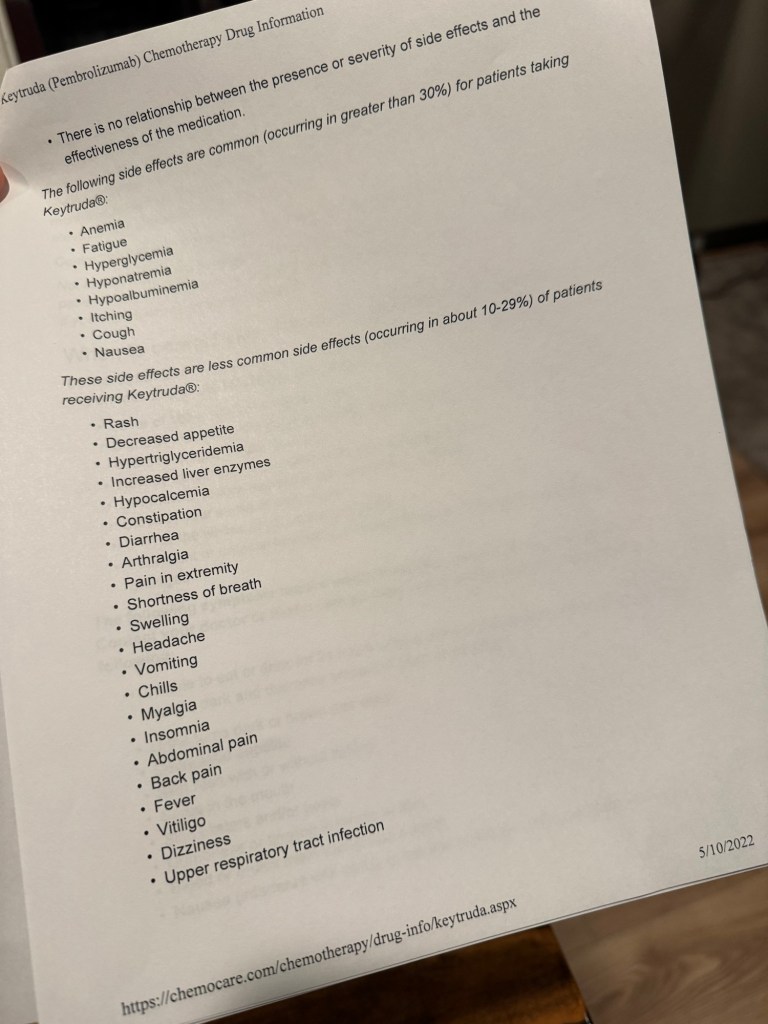
What the heck is that? Chemo teach is what they call the Chemotherapy education before you start chemo. It’s about an hour with a nurse practitioner who goes over all of the possible side effects of chemo, what to look out for, what medications you will need, etc. So possible side effects of chemotherapy and immunotherapy:

1. Possible allergic reaction

2. Constipation

3. Diarrhea

4. Dry skin

5. Sensitive mouth or mouth sores

6. Hair loss

7. Blurry vision

8. Edema (swelling)

9. Ringing in the ears or hearing loss

10. Increased risk for infection

11. Headaches

12. Neuropathy

13. Anxiety

14. Rash

15. Drowsiness

16. Fatigue

17. Fever

18. Chills

19. Shortness of breath

20. Nausea/ vomiting

21. Low blood counts (red and white blood cells)

22. Heart burn

23. Low blood pressure

24. Darkening of the skin

25. Nail changes

26. Yellowing of the eyes

27. Unusual bleeding or bruising

28. Taste changes

29. Weakness

30. Abnormal magnesium levels

31. Abdominal pain

32. Abnormal liver enzymes

33. Nephrotoxicity

34. Blood in your stool

35. Muscle cramps or twitching

36. Dizziness or confusion

37. Anemia

38. Hyperglycemia

39. Hypoalbuminemia

40. Itching

41. Cough

42. Decreased appetite

43. Hypertriglyceridemia

44. Hypocalcemia

45. Arthralgia (joint pain)

46. Weakened immune system

47. Insomnia

48. Upper respiratory tract infection

49. Impaired thyroid function

50. Vitiligo

Oh is that all? Sign me up…

And what do you need at home in case any of the above happen? You will need to obtain the following prescriptions and over the counter medications to keep on hand: Benadryl, anti-diarrheal, Mira lax, stool softener, lorazepam (anti anxiety and sleep aide), ondansetron (anti nausea), famotidine (heart burn medication), hydroxyzine (itching relief), prochlorperazine (anti nausea), letrozole, Motrin, Glutamine (helps with neuropathy), Tylenol, and Claritin (helps with joint pain).

You will also need a thermometer, oximeter and cold mitts for your hands and feet to slow the blood flow to your hands and feet during chemo treatment to prevent neuropathy.

And I thought I liked checklists….

Next up-

All the other tests and scans came back clear- bone scan, brain MRI, echocardiogram (they complete an echo before chemo to get a prior scan of your heart due to the harsh effects of chemo on your cardiac function). All scans came back clear EXCEPT for a small spot on my liver showed up on the abdominal CT. So… they ordered a liver MRI to follow up. The liver MRI came back with a small lesion, however they didn’t seem concerned. “Small and stable” is how they described it. So I put that on the “do not worry about” list and moved on! Time to meet with the medical oncologist, Dr. Rinn. With all the information I had already gathered, this appointment was pretty simple. What chemotherapy I would be prescribed and when do I start. The chemotherapy that Dr. Rinn chose for my treatment has been proven to work for some patients with my type of breast cancer. I was prescribed 2 rounds of chemo that I would be receiving, however I would be receiving them in opposite order than the typical treatment. First up- taxol and carbo. This treatment was 1x per week for 12 weeks. I was set to have a 2 week break between chemos and then begin another round of chemo called AC, 1x every other week for 8 weeks. Now, I chipped away at my checklist down to the following:

1) Chemo teach

2) Obtain medications for side effects of chemo

3) Get a port

Start date 12/15/22

Biopsy

What are all these tests for anyways? Making sure the cancer hasn’t metastasized in my bones, organs or lymph nodes. The first place breast cancer usually metastasizes is in the lymph nodes. One of my lymph nodes was a little inflamed so we decided to get it checked out. So next up… lymph node biopsy!

The lymph node biopsy was similar to the breast biopsy I had on the original tumor. For these types of tumors and for lymph nodes they usually do a less invasive procedure using ultrasound guided biopsy. So they have 2 clinical staff working on you at the same time. 1 ultrasound technician and the MD. The ultrasound tech controls the ultrasound to find the tumor or lymph node while the doctor numbs you with a local anesthetic, makes a small incision and inserts a fairly large needle that has a little grabber at the end. The doctor grabs the tissues that are needed for testing and then goes back in and inserts a little clip. This clip shows up on MRIs and other scans to show that was the tumor or lymph node they took tissues from before. Anyways, the entire biopsy only takes about 30 minutes and after the numbness wears off I was a little sore but not bad. They have you use an ice pack for swelling and send you on your way.

So after my biopsy… of course I went back to work, because what else is there to do. So I am going to see one of my home health patients as an occupational therapist and forgot that I still had the ice pack in my armpit. I went to lift up my arms to show him an exercise and the ice pack fell on the floor in front of me… how embarrassing.

So, like I said, IF the cancer was going to spread anywhere it would usually go to the lymph nodes first. IF the cancer spread already, we were looking at a way bigger problem than just breast cancer. So at the time I didn’t think much of the biopsy results, however in hindsight, these were probably the most important results besides the original diagnosis. So…. Drumroll please.

And… lymph node biopsy came back CLEAR!

It’s going to feel like you’re peeing your pants

As you can see, nothing about this process screams modesty. While I’m talking about the scans I might as well tell you about a bone scan and CT.

The bone scan was done at local hospital in the radiology department. They have you come in about 2 hours before your scan and inject a radioactive material (radiotracer) into your vein. The substance travels through your blood to your bones and organs. As it wears off, it gives off a bit of radiation. This radiation is detected by a camera that slowly scans your body. They have you leave and come back an hour or so later for your scan. So what do you do while you are radioactive and have an hour to kill? Well, I went to Old Navy next door and tried to stay away from everyone while I picked out new workout clothes. If you know me, you know I never like to waste time! Anyways…the actual scan was pretty cool. I was able to see the entire scan on the screen in front of me. Took about 45 minutes to an hour and as the scan progressed up my body, all my bones and organs showed up on the screen. The radiologist was explaining everything to me as it went. Learned a lot!

Now, for the abdominal CT scan. Very quick and easy actually. They have to place an IV before the scan to inject contrast, similar to the MRI. However, a CT only takes a few minutes and you are in and out! As you are getting the scan they inform you that they are going to inject the contrast and it is going to feel like you are peeing your pants. And yes, it does. Your mouth and throat get warm and so does your entire crotch. That’s gotta be good for ya!